

Table of Contents
Introduction
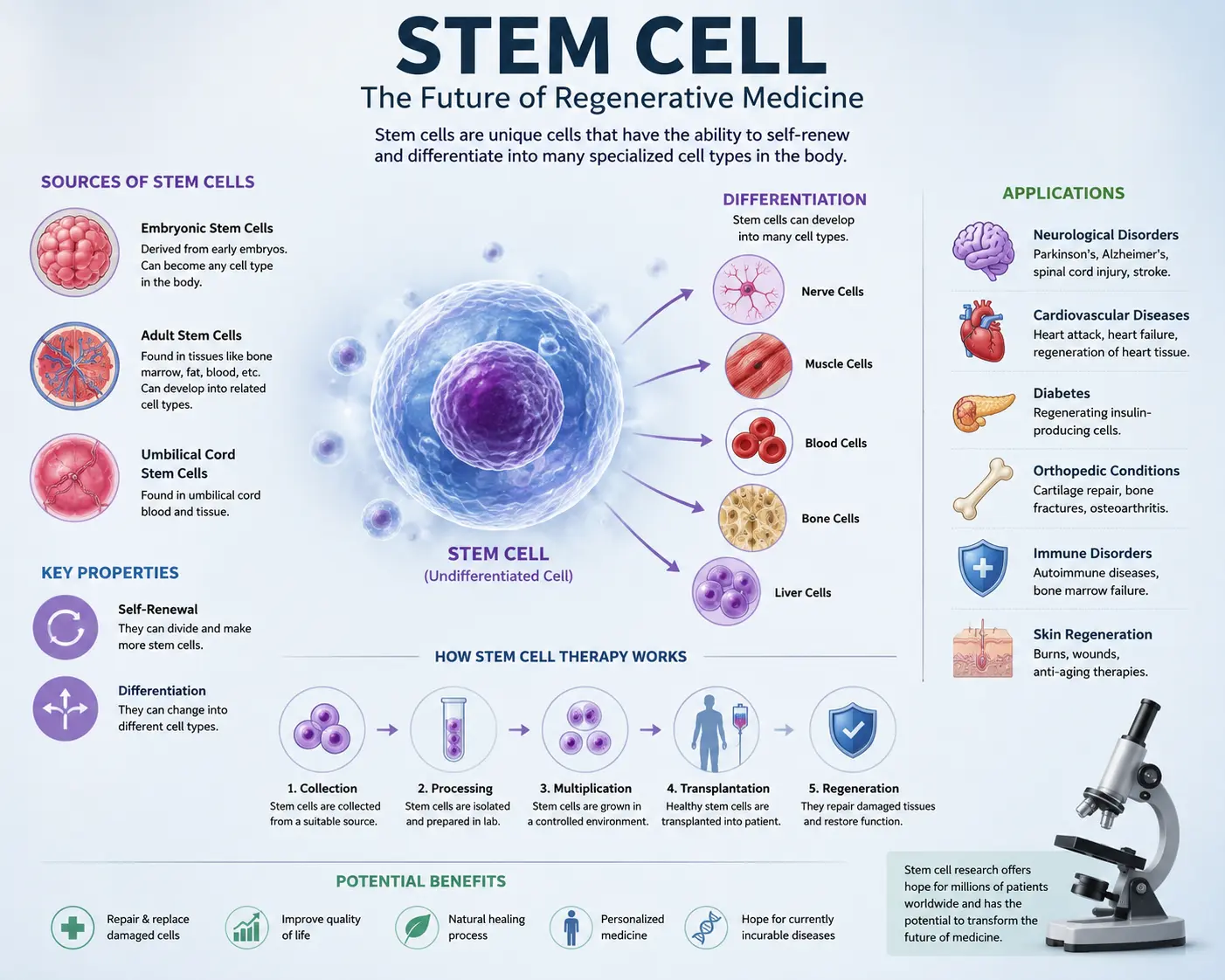
Stem cells are undifferentiated cells that differentiate into specialized cells to make up different types of tissue in the human body. They are characterized by the ability to renew themselves through mitotic cell division and differentiate into specialized cells. They play a vital role in the growth, development, and repair of skin, muscles, and different types of tissue. Stem cells are present in all of us.
The term “stem cell” was coined by German biologists Theoder Boveri and Valentin Haecker in the 19th century. The key property of stem cells was defined by Ernest McCulloch and James Till at the University of Toronto. They discovered stem cells of blood known as hematopoietic stem cells.
Overview of stem cell therapy
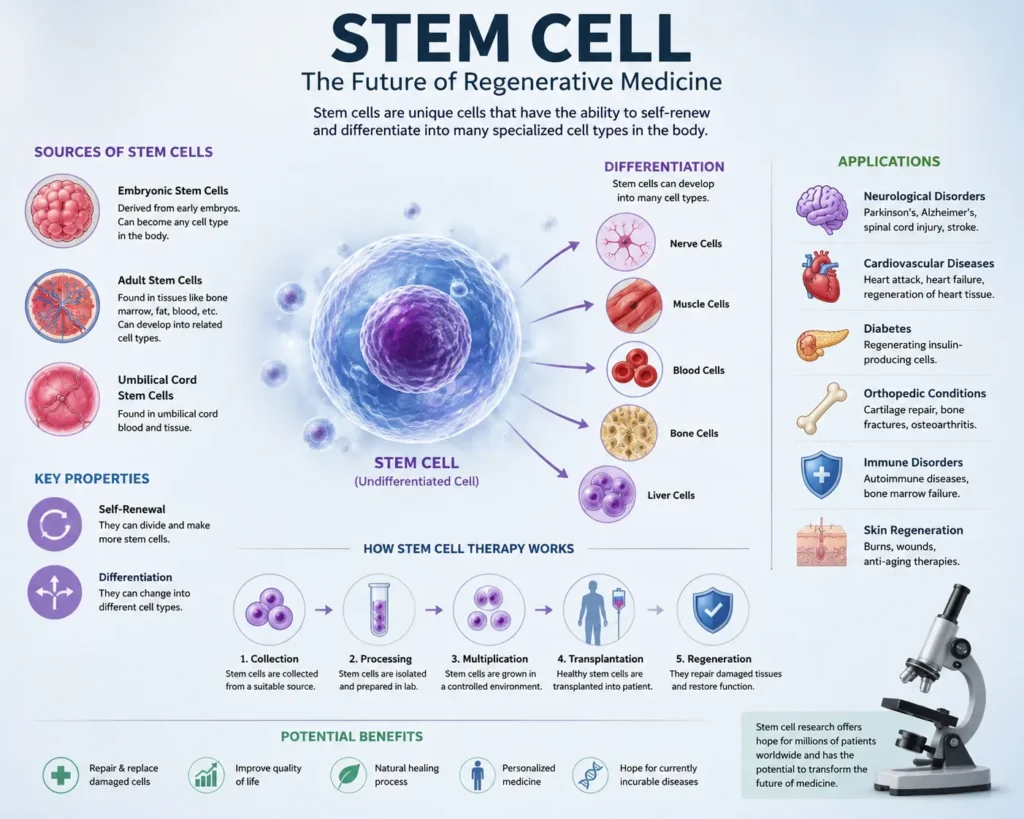
Stem cell therapy is also known as regenerative medicine. In this therapy, we use the body’s stem cells or their derivatives to repair, replace, or regenerate the injured part of the body.
The goal of stem cell therapy is to harness the regenerative and reparative capabilities of stem cells to treat or manage diseases and injuries that currently have limited treatment options.
Importance of stem cell in medicine
Stem cell therapy is very important in medicine and treatment. Stem cell therapy is the most promising and advanced in modern medicine. Stem cells are capable of self-renewal and developing into different types of cells to repair, develop, and regenerate damaged cells. Some importance are
- Regenerate damaged tissue
- Treatment of blood disorder
- Treatment of neurodegenerative disease
- Repair heart tissue
- Bones and cartilage repair
- Treatment of burn and injured skin
- Organ regeneration
- Drug testing
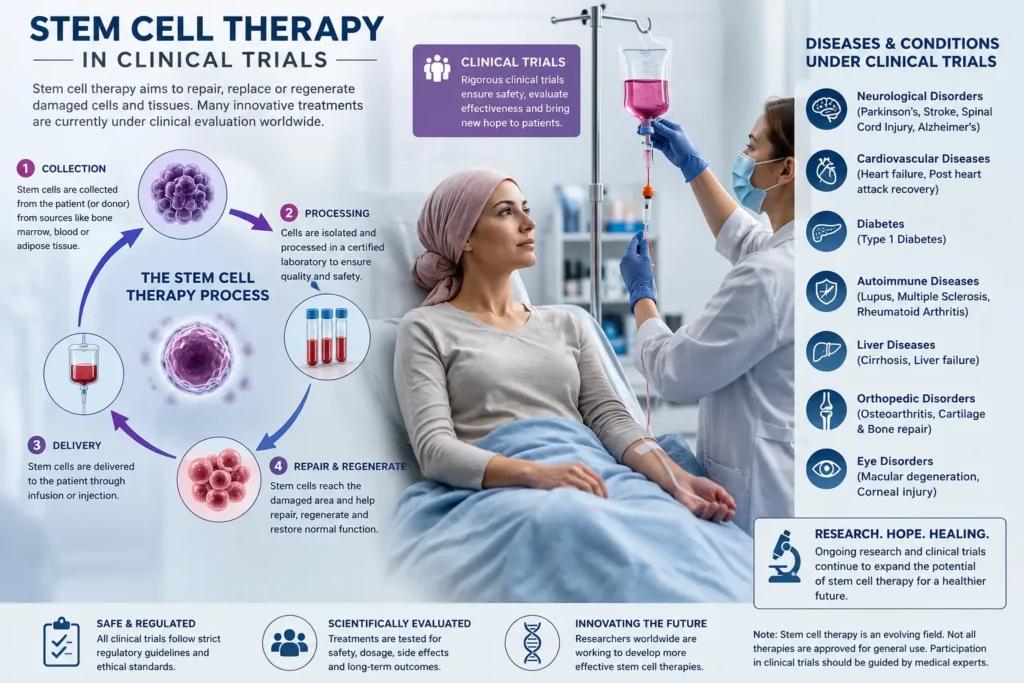
List of Diseases treated by stem cells
Diabetes
Stem cell theory restores the body’s ability to produce insulin by repairing insulin-producing β (beta) cells of the pancreas. It is generally used in type-1 diabetes, where immune cells destroy these cells.
Muscular Dystrophy
Muscular dystrophy is the inherited disease that is characterized by progressive muscle weakness and degeneration. This disorder is caused by a mutation in the dystrophin gene. This gene is responsible for the structure and function of muscles.
Stem cells repair and regenerate damaged muscle tissue. Stem cell therapy works as
- Collection of stem cell
- Transplantation
- Migration and differentiation
- Muscle regeneration
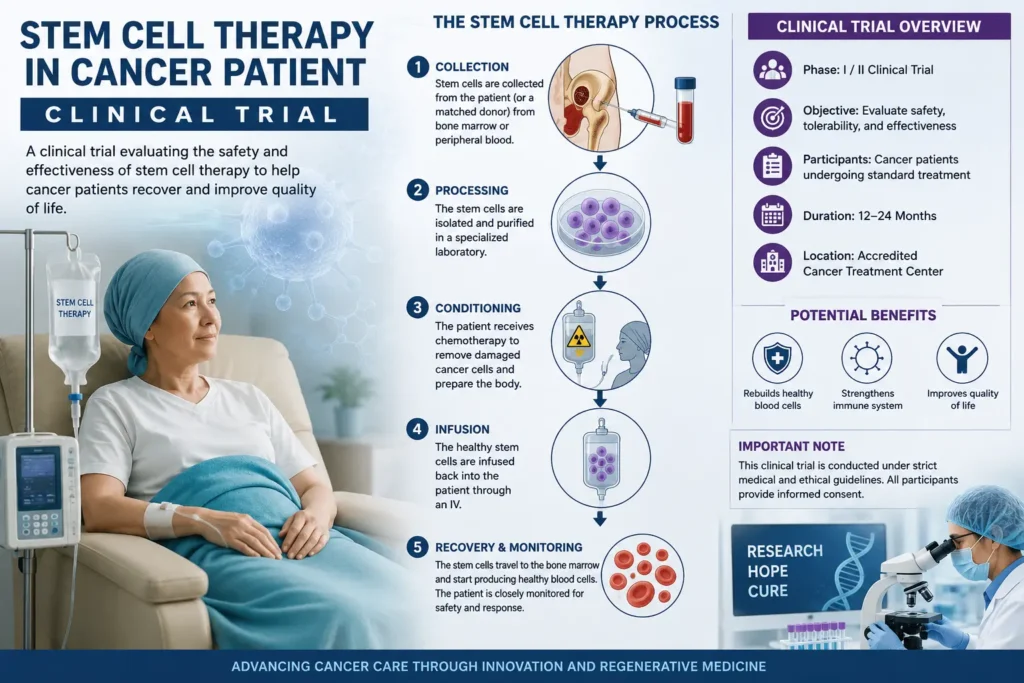
Cancer treatment
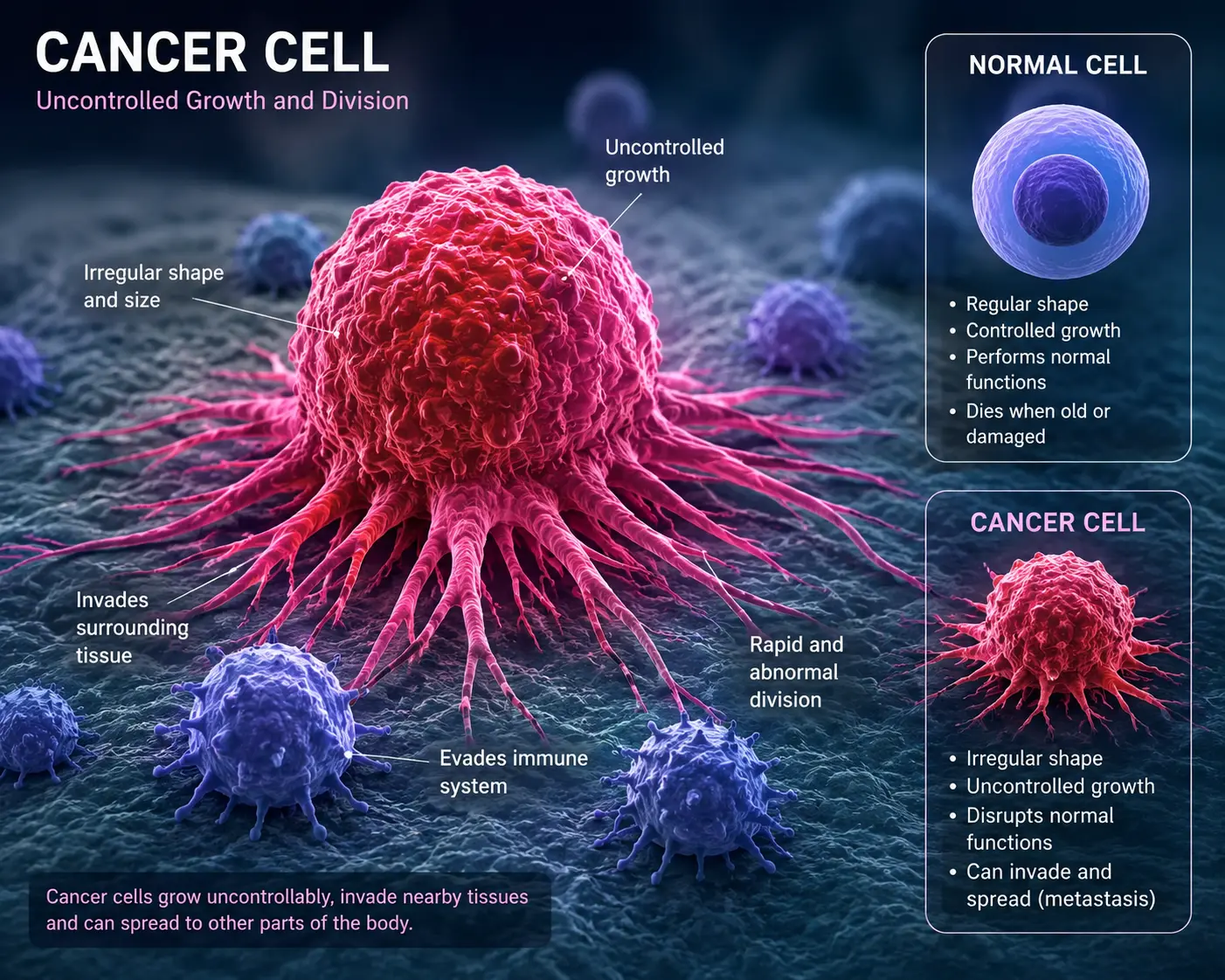
Stem cells are used to restore the body’s blood-forming system after a high dose of chemotherapy. This therapy is known as hematopoietic stem cell transplantation or bone marrow transplantation.
Liver Disease
Liver disease is treated by stem cells by promoting liver regeneration, reducing inflammation, and slowing the progression of fibrosis.
How stem cells work in liver disease
- Migration to the injured liver
- reducing of inflammation
- Reduction of liver fibrosis
- Stimulation of liver regeneration
- formation of liver like cell
Spinal cord injury
A spinal cord injury can damage the nerve cell and its parts, like the axon and other parts. Stem cells can replace damaged tissue but also can reduce inflammation and start regeneration.
Lung disease
For lung disease, the stem cells studied are called mesenchymal stem cells (MSCs). In lung disease, alveoli can be damaged and become inflamed. Stem cells can regenerate new lung cells and replace damaged cells. The evidence shows that MSCs mainly help to release signaling molecules.
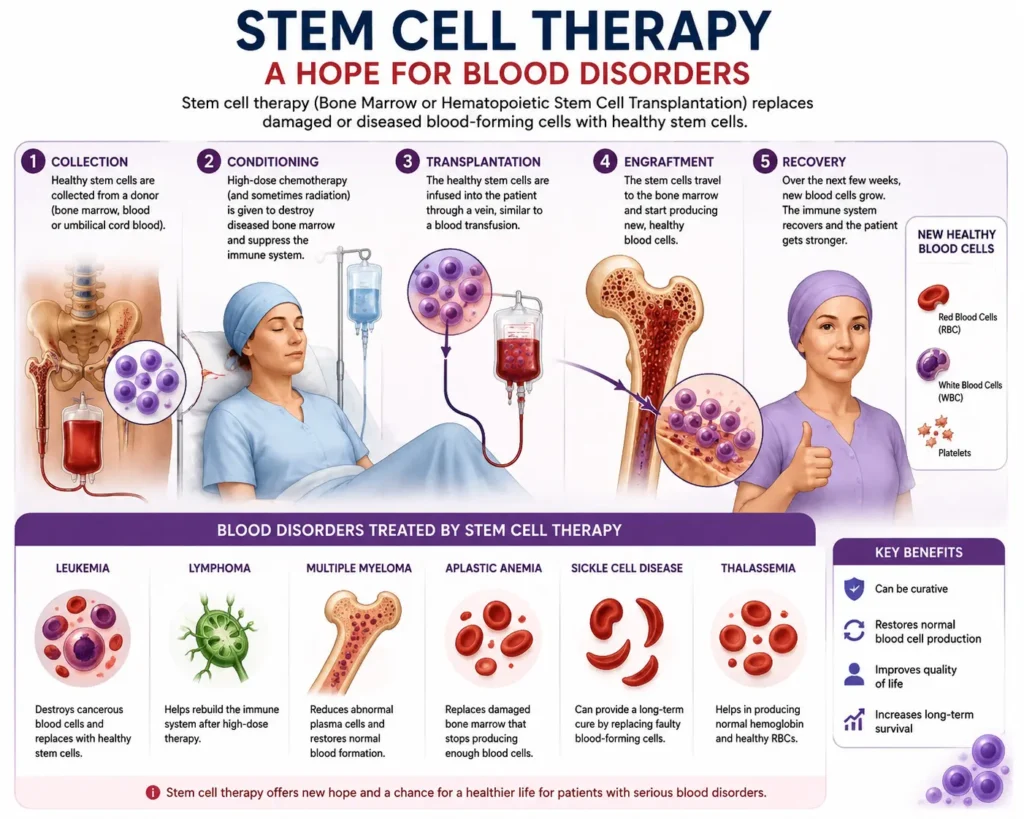
Blood disorder
Stem cell therapy is one of the most effective treatments for the many blood disorders. It replaces damaged blood-forming stem cells with healthy stem cells. Some blood disorders and their treatment—
| Blood disorder | Stem cell therapy |
| Leukemia | Replaces marrow after chemotherapy; can cure many patient |
| Lymphoma | Used after high dose of chemotherapy |
| Multiple myeloma | Autologous stem cell transplant improve survival |
| Sickle cell anemia | Can provide a potential cure by replacing defective blood-forming cells |
| Myelodysplastic syndrome (MDS) | Only potentially curative treatment for many patients |
| Thalassemia major | Can permanently restore normal blood cell production |
| Aplastic anemia | Replaces damaged bone marrow with healthy stem cells. |
Future of stem cell Therapy
The future of stem cell therapy is very promising, as advances in stem cell biology, gene editing, tissue engineering, and regenerative medicine are expanding the potential of this approach. Many new uses of stem cell transplantation are still being studied in clinical trials, but it is already a standard treatment for several blood disorders.
Future of stem cell therapy
- Regenerative medicine
- Treatment of neurological disorder
- Gene editing stem cell therapy
- Artificial organ and tissue engineering
- cancer therapy
- Drug discovery
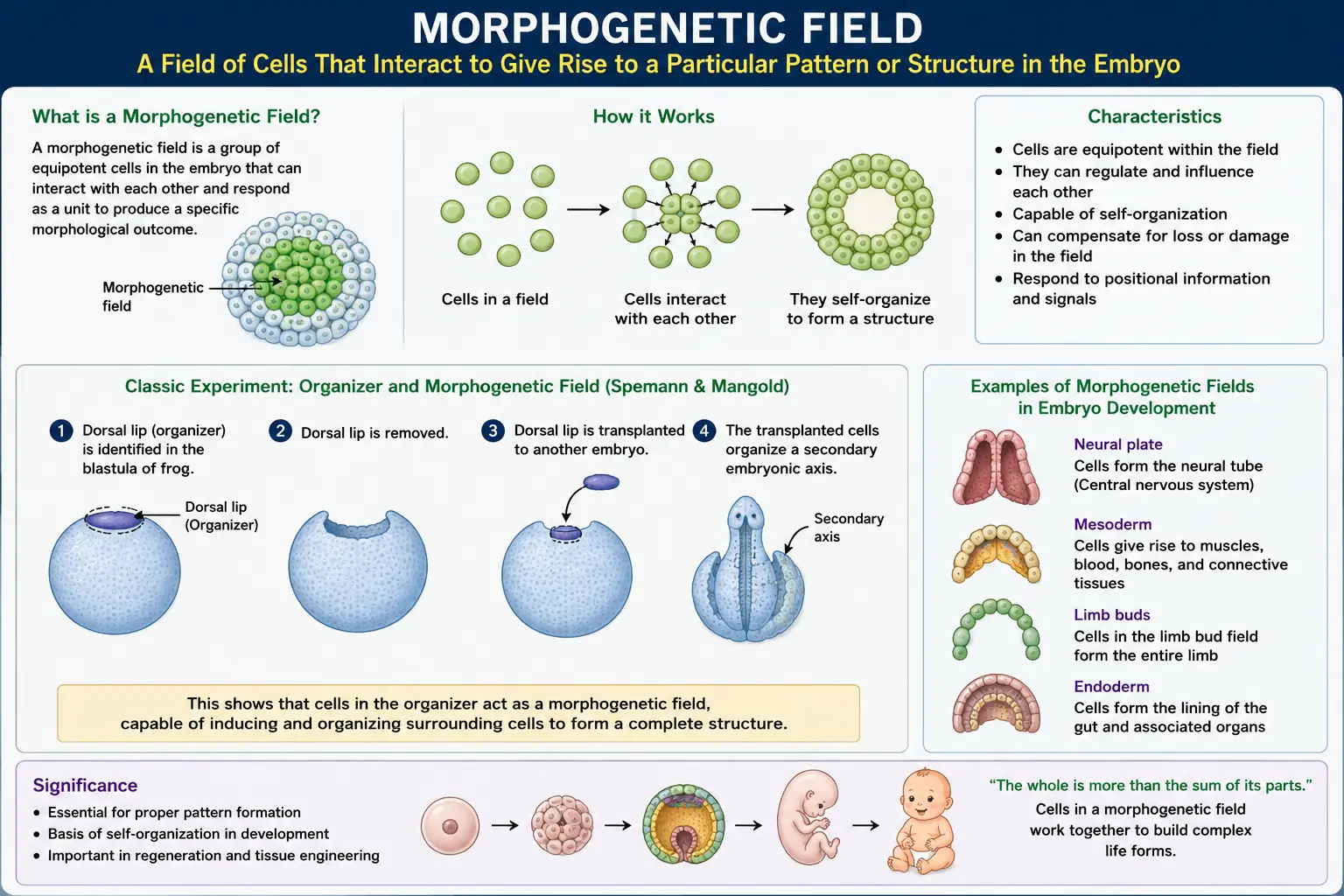
Also read- quantum biology and morphogenetic field
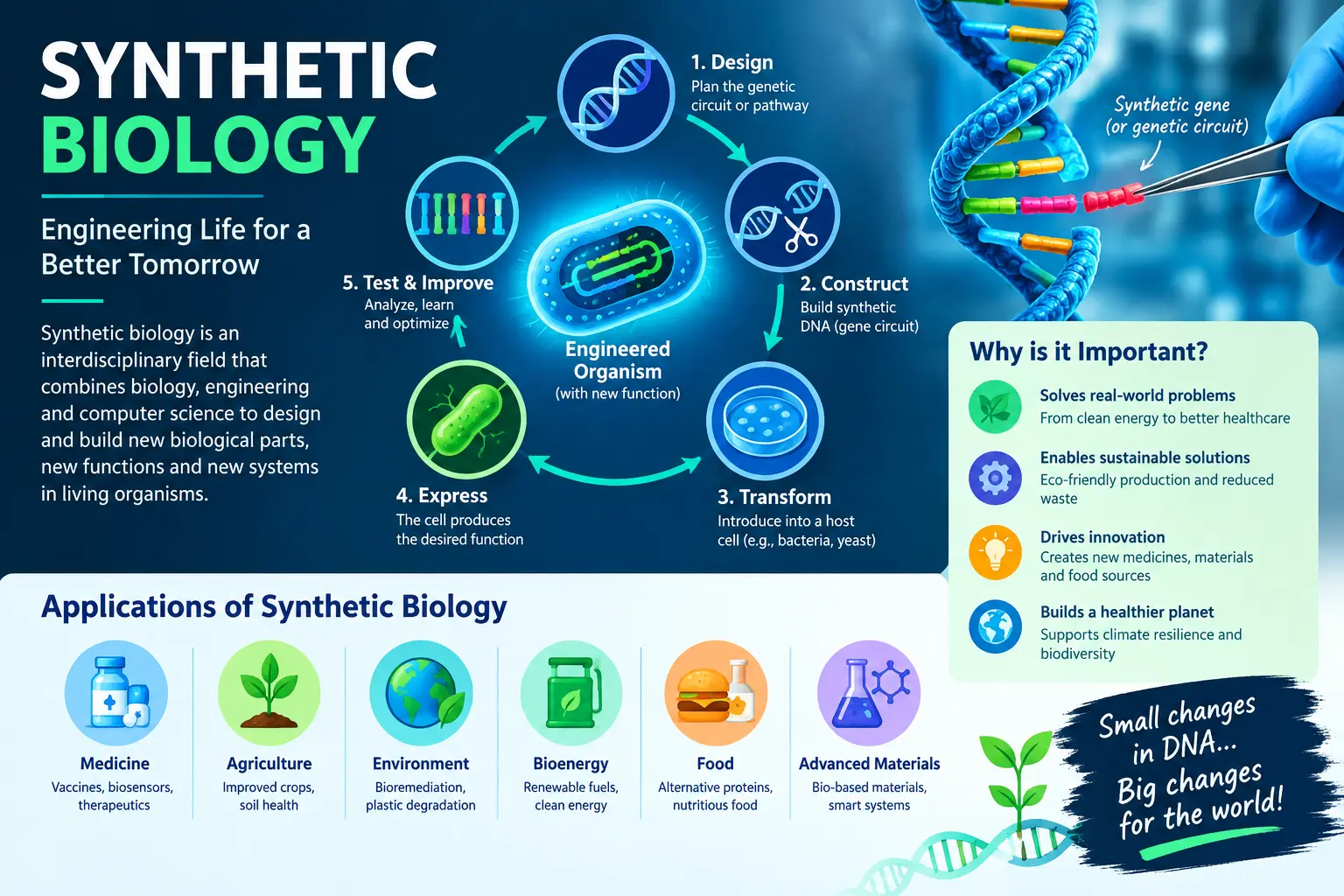
Also read: Humans create life. World’s 1st Synthetic Cell Model
Conclusion
Stem cell therapy has transformed modern medicine and opened up the possibility of treating diseases that were once considered incurable. Stem cell therapy is presently used to treat diseases of the blood, such as leukemia, lymphoma, multiple myeloma, aplastic anemia, sickle cell disease, and thalassemia, and hematopoietic stem cell transplantation has become a well-established and often life-saving treatment. Stem cells are also under investigation for use in neurological disorders, heart disease, diabetes, spinal cord injury, autoimmune diseases, and tissue regeneration.
Stem cell therapy is effective because it actually repairs or replaces damaged cells, restores normal function of the tissue, and helps the natural healing process. Recent advances in gene editing, induced pluripotent stem cells (iPSCs), tissue engineering, and regenerative medicine are expanding its therapeutic horizon. Such innovations could lead to safer, more personalized, and more effective treatments in the future.
However, despite the tremendous potential of stem cell therapy, it still faces challenges such as high costs of treatment, immune rejection, ethical concerns for some sources of stem cells, and the need for long-term safety and efficacy data. These limitations need to be addressed through ongoing clinical research, technological innovation, and responsible regulation.
To conclude, stem cell therapy is among the most significant breakthroughs in biomedical science. As research continues, the list of diseases that can be treated with stem cell therapy is expected to grow, bringing new hope to millions of patients around the world and ushering in a future where regenerative medicine is a mainstay of healthcare.
FAQ
-
What are stem cells?
A basic type of cell found in humans and animals that can divide and differentiate into different types of cells.
-
Stem cells have the ability to self-renew.
Yes, stem cells have the ability to self-renew.

2 thoughts on “Unraveling the List of Diseases Treated by Stem Cells: Breakthroughs in Modern Medicine”
Pingback: Humans create life! World's 1st Synthetic Cell Model - Science Toppers
Pingback: GATE 2027: Eligibility criteria, Exam Pattern and Exam Date and - Science Toppers