

Table of Contents
Introduction
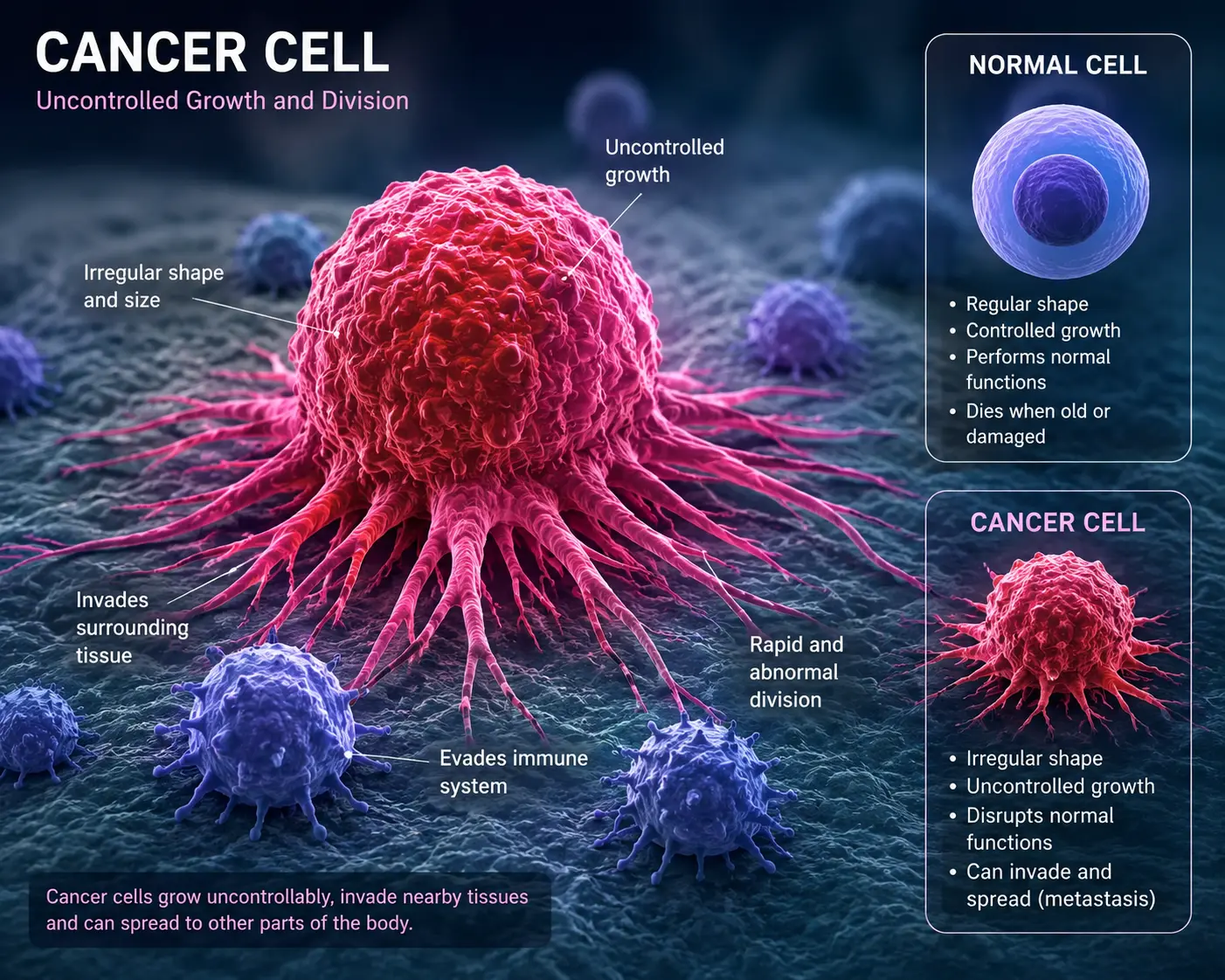
Normal cells and cancer cells have the same basic parts. Both normal cells and cancer cells contain DNA. Both follow the general plan for growth and repair in the body. But normal cells grow and divide and die in a normal cycle that helps keep tissues healthy. But cancer cells ignore the “brakes” on normal growth control. They keep dividing uncontrollably, making tumors, and they can invade nearby tissues and spread throughout the body. Understanding the differences between a cancer cell vs normal cell may help explain how cancer is started and why it can be dangerous.
Cancer cell vs normal cell—watch now
What is cancer cells?
Cancer is a disease in which cells grow out of control. These cells may break off and travel to other parts of the body, where they may grow.
Usually cells in the body grow and divide to make new cells to replace cells that are old, damaged, and dying. If the process of cell division is not controlled and the mutated cells divide fast, abnormal lumps of tissues or tumors are formed. The tumor growths can be benign or malignant.
Benign (non-cancerous) tumors can become large, but they do not invade nearby tissues. Once they are gone they do not grow back. Benign tumors are not cancerous but can sometimes be life threatening, such as those growing in the brain.
Malignant or cancerous tumors can come back after being surgically removed. They may invade or spread to adjacent tissues or distant organs. This is known as metastasis. Certain cancers, such as the leukemias, don’t form solid tumors.
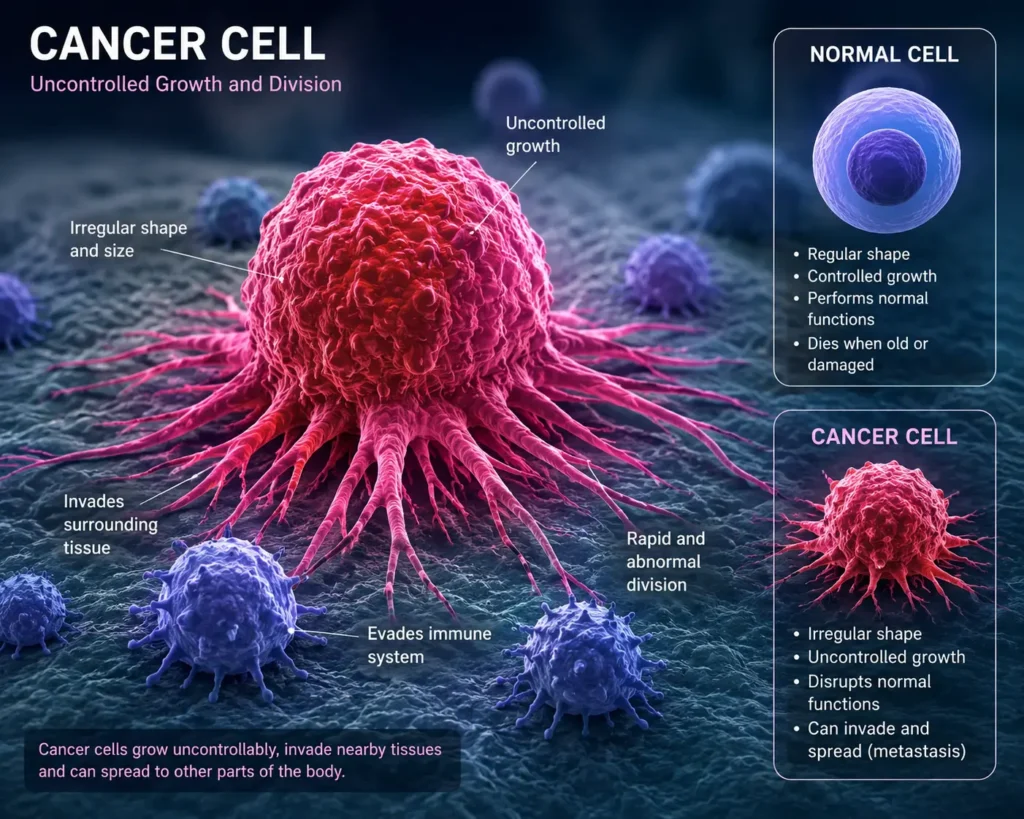
Cancer Cell vs Normal Cell
| Normal cell | Cancer cell |
| Grow and divide in a controlled manner. | Grow and divide in an uncontrolled manner. |
| Usually have a uniform size and shape | very often in size and irregular shape |
| Respond to the signal that tells them when to stop. | generally ignore the signal that stops growth |
| Follow the regular cell cycle. | does not follow the cell cycle |
| Under programmed cell death whenever a cell gets damaged or is no longer needed | It resists the programmed cell death. |
| Maintained normal and healthy chromosomes | contain abnormal, damaged, or mutated chromosomes |
| They usually stop growing when they touch other cells. | May continue growing despite contact with other cells. |
| Remains within their assigned tissue | can invade nearby tissue |
| Perform their specialized function effectively. | It lose their assigned function |
Difference between cancer cell and normal cell—
Normal cells only divide when they receive a suite of appropriate signals. Cancer cells divide on their own even when those signals are absent and also resist signals to self-destruct (apoptosis or programmed cell death).
Some cancer cells use different pathways to convert those nutrients into energy. Cancer cells get their energy from different nutrients than normal cells do, and some can multiply faster than normal cells. For instance, a tumor can trigger the growth of new blood vessels (angiogenesis) to provide it with more nutrients.
Cancer cells can evade parts of our immune system that normally kill abnormal or invading cells. They can hijack our immune system to aid their own proliferation. For example, cancer cells can masquerade as normal cells by expressing antigens on the cell membrane.
Normal cells stop dividing when they touch other cells. Generally they don’t migrate to other areas. However, cancer cells invade into the surrounding tissues and spread to other organs.
The altered characteristics of cancer cells are responsible for their proliferation. Thus, specific treatment has been developed to interfere and stop the way cancer cells sustain themselves. For example, some cancer treatments prevent the growth of blood vessels that carry oxygen and nutrients to the tumor.
What Causes Cancer?
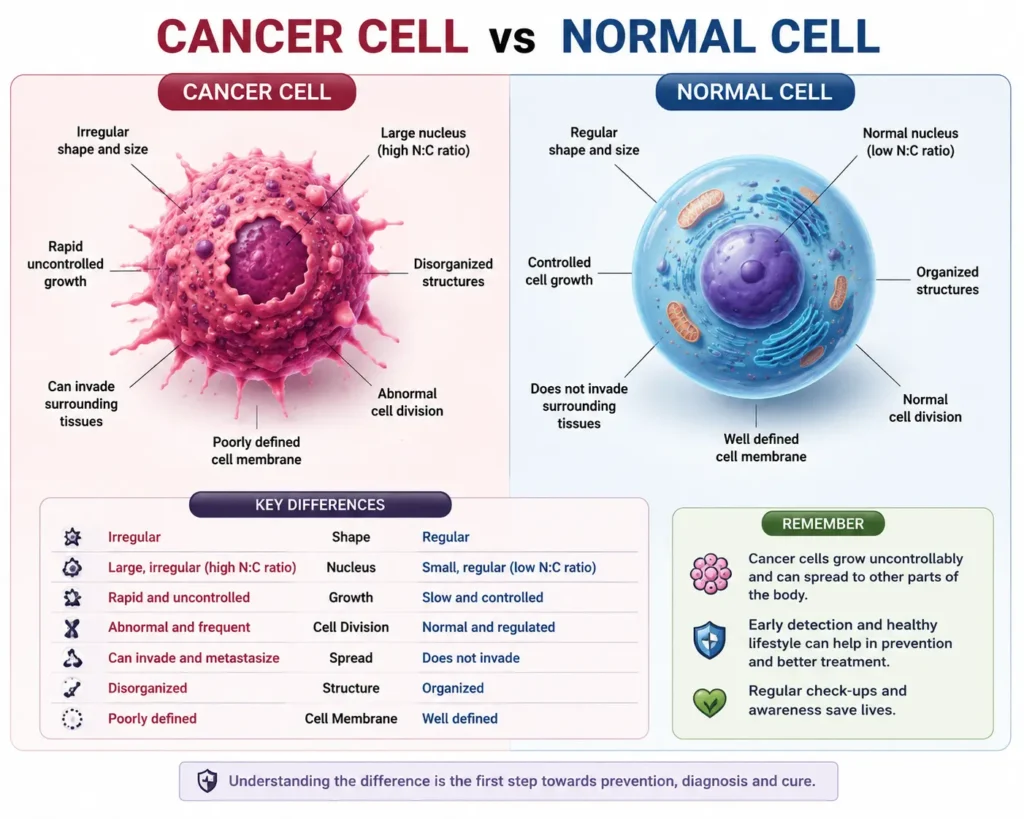
Cancer can be scary because it often seems to come out of nowhere. In fact, cancer usually begins when changes, called mutations, occur in the DNA that controls how cells grow, divide, and repair themselves. These abnormal cells may multiply uncontrollably instead of dying as normal cells should. Over time they can grow into tumors or spread to other parts of the body.
Single causes are not often. Some people are born with changes in their genes that they got from their parents, while others acquire mutations during their lives due to aging, natural errors during cell division, or exposure to harmful substances. “Lifestyle and environmental factors can also raise risk.” Tobacco smoke, heavy alcohol consumption, ultraviolet radiation, air pollution, asbestos, and certain chemicals in the workplace are known risks. Certain infections, including human papillomavirus (HPV) and hepatitis viruses, may also play a role in cancer development.
Also read—Can Teleportation Become Reality by 2050? Scientific research will surprise you
“Just because you have a risk factor, it doesn’t mean you’re going to get cancer, and some people get cancer with no risk factors.” But good choices can help lower the risk and promote overall health.
- Avoid tobacco and secondhand smoke.
- Limit alcohol consumption.
- Protect your skin from excessive sunlight.
- Eat a balanced diet and stay physically active.
- Maintain a healthy weight.
- Follow recommended screenings and vaccinations.
- Discuss unusual or persistent symptoms with a healthcare professional.
Types of cancer cells
Bladder cancer
Bladder cancer occurs when bladder cells start to grow without control. The bladder is the organ present just below the abdomen that stores urine.
Type of bladder cancer: Urothelial carcinoma, squamous cell carcinoma, Adenocarcinoma
Breast cancer
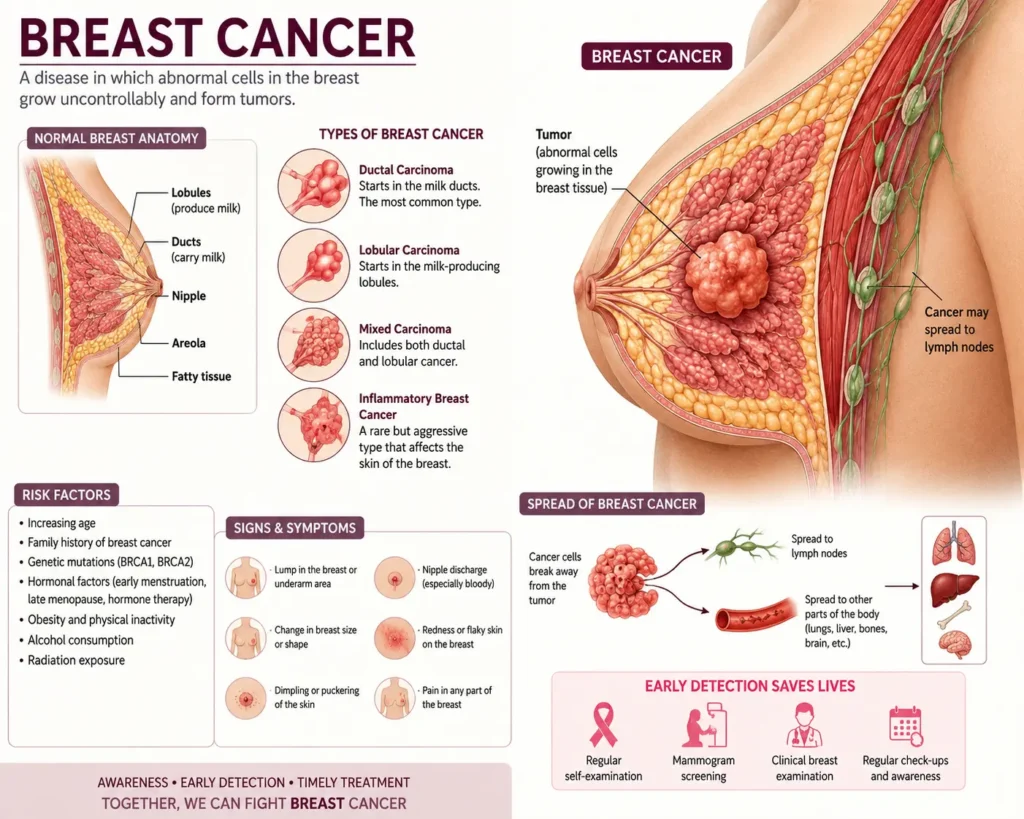
Breast cancer is the most common type of cancer as well as skin cancer. Mammograms detect breast cancer before cancer cells spread. Breast cancer exists in four stages. Breast cancer primarily affects women 45 and older, but any person with breasts can develop breast cancer. It is rarely seen in children and men.
Lung cancer
There are two main types of lung cancer: non-small cell lung cancer and small cell lung cancer. Smoking is the major cause of lung cancer, but non-smokers can also get lung cancer.
Lung cancer prevention—
- changing lifestyle or eating habits •
- Avoid taking what is known to cause cancer
- Taking medicine to treat a precancerous condition to keep cancer from starting.
Lymphoma
Lymphoma is a general term for cancers that start in cells of the lymph system. There are two main types, Hodgkin lymphoma and non-Hodgkin lymphoma (NHL). Hodgkin lymphoma is often curable. The outlook for NHL depends on the type.
Pancreatic cancer
Two cell types in the pancreas can give rise to pancreatic cancer. These are the exocrine cells and the neuroendocrine cells (e.g., the islet cells). The more common one is the exocrine type. It is usually seen in an advanced stage. Less common are pancreatic neuroendocrine tumors (islet cell tumors) with a better prognosis.
Prostate cancer
Prostate cancer is the most common cancer in the United States and the second leading cause of cancer death in men. Prostate cancer usually grows very slowly, and finding and treating it before symptoms appear may not help men’s health or help them live longer.
Skin cancer
Skin cancer is the most common cancer. The major types of skin cancer are squamous cell carcinoma, basal cell carcinoma and melanoma. Melanoma is much less common than the other types, but much more likely to invade nearby tissue and spread to other parts of the body. The deadliest type of skin cancer is melanoma.
FAQ
What is cancer?
Cancer is a type of disease in which cells of the body divide uncontrollably.
What is the difference between a cancer cell and a healthy cell?
Cancer cells divide uncontrollably and spread over the body, while healthy cells divide controlly
1 thought on “Cancer Cell vs Normal Cell: What You Need to Know for Better Health”
Pingback: Effective Blood Cancer Treatment: Latest Advances and Options for Patients in 2026 - Science Toppers