

Table of Contents
What is blood?
Blood is the fluid connective tissue that flows throughout the entire body through blood vessels with the help of the heart. Blood carries respiratory gases (like oxygen and carbon dioxide) and digested food (like carbohydrates, protein, fat, vitamins, and minerals) and also carries nitrogenous waste, enzymes, and hormones. Blood helps to regulate metabolism regularly and properly. Blood cells originate in the bone marrow from hematopoietic stem cells. If blood does not work properly or there is any problem created in the origin of blood, it is known as blood cancer. In this article, we discuss blood cancer treatment.
Types of blood cells
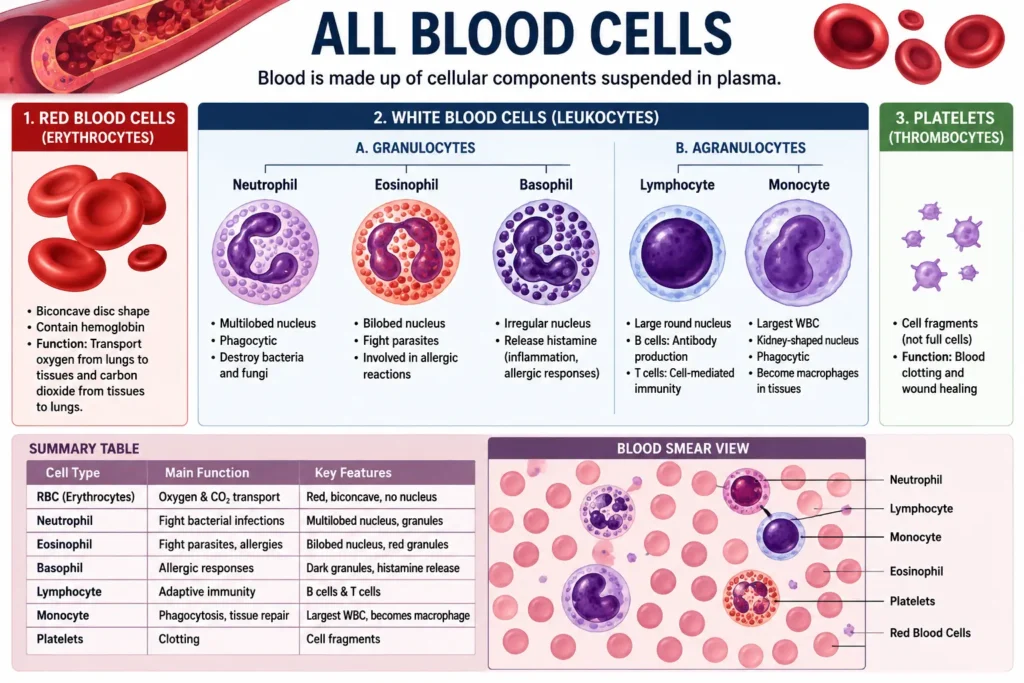
Blood is the composition of liquid and solid material. Liquid parts are known as plasma that flow inside the blood vessels and transport blood cells from one part of the body to another part of the body. A solid part of the blood contains three types of blood cells—
- Red Blood Cell (RBC)—It is also known as Erythrocytes. Its color is red due to the presence of a pigment protein called hemoglobin. RBCs carry oxygen and carbon dioxide to regulate respiration and other metabolism.
- White Blood Cell (WBC)—It is also known as Leukocytes. It is colorless due to a lack of hemoglobin. It is an irregularly shaped and multinucleated cell. White blood cells protect us from infection to kill the germs. It acts like an army of the body that fights with the invader and saves us from disease.
- Platelets—It is also known as Thrombocytes. It is a fibrous cell. It helps with blood clotting after injury and prevents blood loss.
origin site of bloods-
Have you ever thought about our blood production site? Blood is produced in the bone marrow of limbs, ribs, and backbones. The process of production of blood cells is known as hematopoiesis. All blood cells originate from unspecialized stem cells, known as hematopoietic stem cells (HSC). Blood cells originate in bone marrow and also mature in bone marrow, but some special cells mature in the thymus and spleen.
What is Blood Cancer
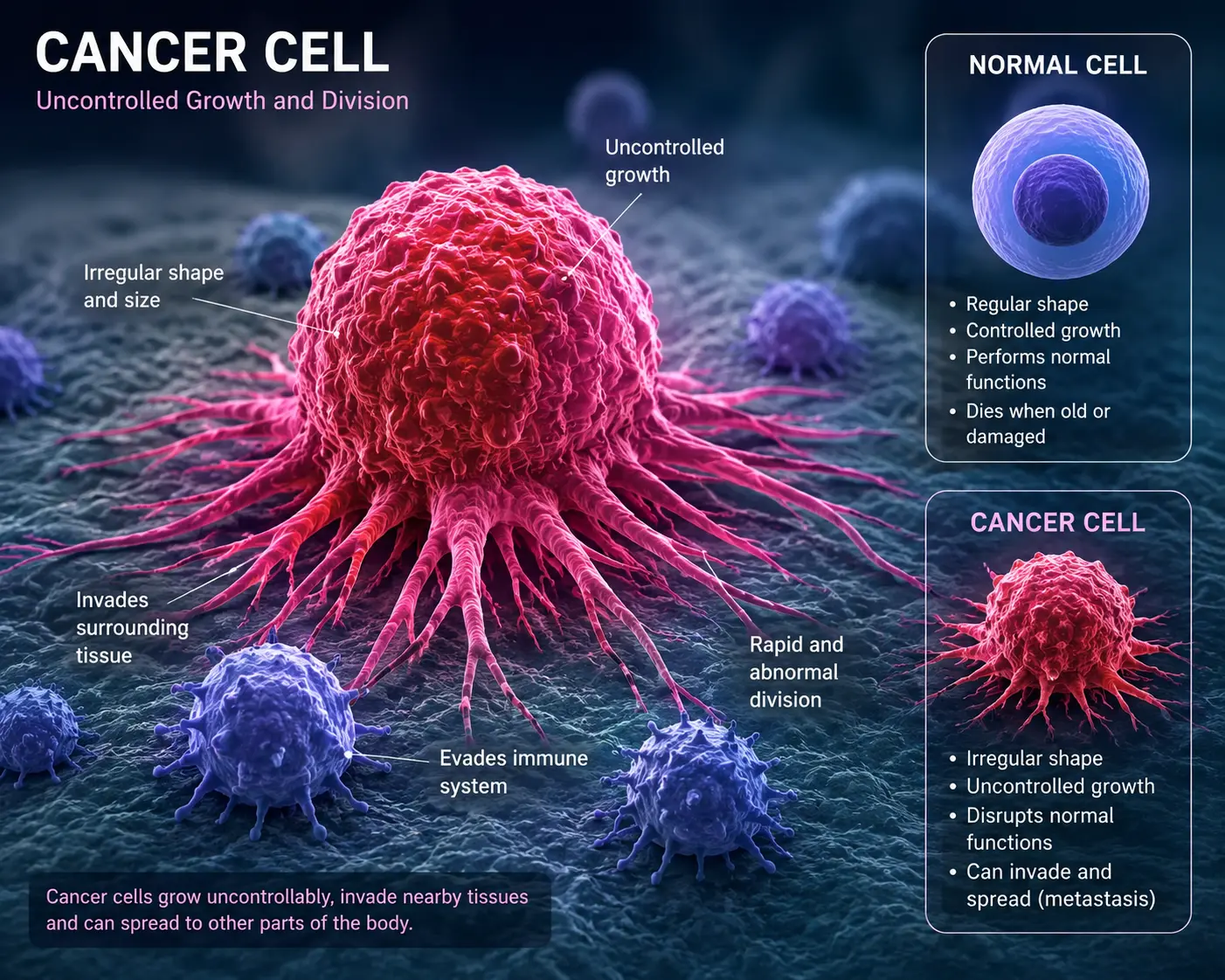
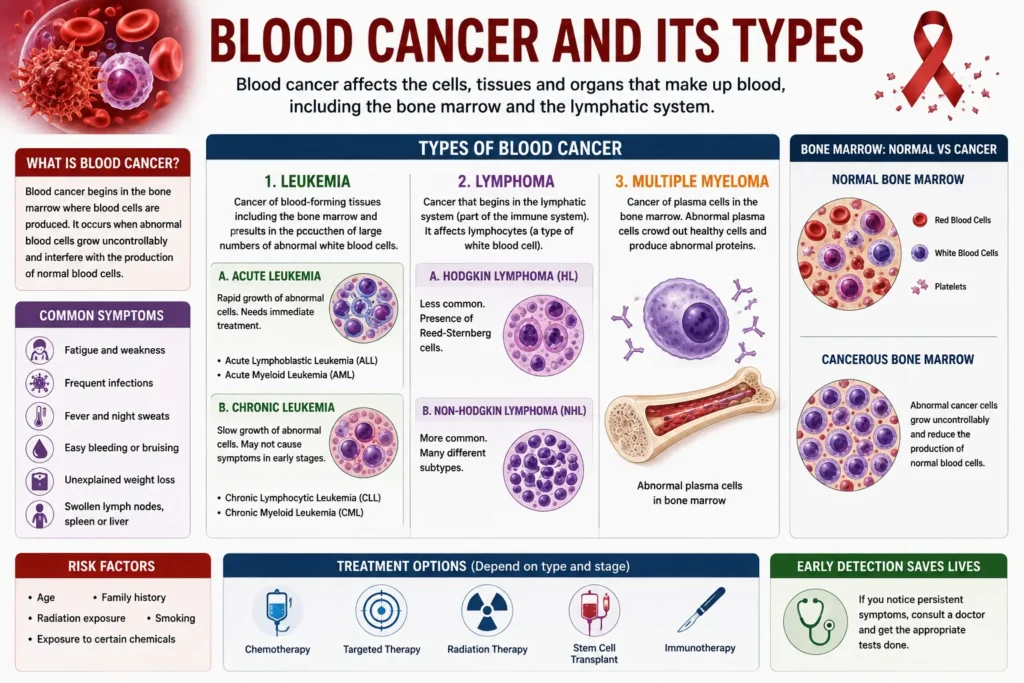
Blood cancers affect how your blood cells are made and how they work. Most of these cancers start in your bone marrow, where blood is made. The stem cells in your bone marrow grow and develop into three types of blood cells: red blood cells, white blood cells, and platelets. Generally in blood cells, the blood cell development process is interrupted, and they do not grow in a normal way. Blood cells start multiplying uncontrollably in an abnormal way. These abnormal cells are called cancerous cells, and they prevent blood from doing many essential functions like transport of oxygen and carbon dioxide, fighting with infection, and blood clotting.
Blood cancer treatment- click here
Type of Blood Cancer
There are three types of blood cancer—
- Leukemia
- Lymphoma
- Myeloma
Leukemia
Leukemia is a type of blood cancer found in your bone marrow, caused by rapid production of white blood cells. These WBCs are not able to fight with infection and affect the bone marrow to produce red blood cells or platelets.
Leukemia may be either acute or chronic. Chronic leukemia develops more slowly than acute leukemia, which needs immediate treatment. Leukemia is also divided into lymphocytic or myelogenous. In lymphocytic leukemia the abnormal cells develop in the marrow cells which become lymphocytes, a type of white blood cell which is involved in the immune system. Myelogenous leukemia is a disease in which the marrow cells that develop into red blood cells, white blood cells and platelets grow abnormally.

Lymphoma
It is about half of the blood cancer that occurs each year. Lymphoma is also known as the cancer of the lymphatic system. The lymphatic system is the system of formation of lymph in the lymph node, and the lymph node is present in the joint in your body. In this cancer disease, white blood cells become lymphoma cells, which multiply and accumulate in lymph nodes.
Myeloma
Myeloma, also known as multiple myeloma, is a cancer of the plasma cells. Plasma cells are white blood cells that produce antibodies, which combat disease and infection in your body. Myeloma cells produce more than enough antibodies, but they do not fight infection. This is unlike healthy plasma cells that contribute different antibodies to your immune system to fight infection. Myeloma cells reproduce and also affect normal production and function of red and white blood cells. An overabundance of these abnormal antibodies circulating in the blood can damage the kidneys. Myeloma cells often also make substances that cause destruction of bone. This causes high levels of calcium, bone pain, and fractures.
Also read- Cancer Cell vs Normal Cell: What You Need to Know for Better Health
Myeloma cells develop in the bone marrow, the soft tissue inside your bones. Sometimes myeloma cells can travel in your bloodstream and then gather in other bones in your body. It is often called multiple myeloma because it can occur in many places in the bone marrow. These myeloma cells produce an abnormal antibody known as monoclonal (M) protein. It has no helpful immune function and can even damage the kidneys and other organs. The disease is often diagnosed by the elevated M protein in the blood or urine.
Blood cancer treatment
What are the options for blood cancer treatment
Blood cancer treatment options span five primary categories, selected based on subtype, staging, and molecular markers identified at diagnosis. The five categories are
- Chemotherapy: cytotoxic drug patterns interfering with the replication cycles of malignant cells
- Targeted treatments: precision agents targeting specific molecular drivers such as BCR-ABL, FLT3 or BTK
- Immunotherapy: treatments that trigger or harness your immune system to locate and destroy cancer cells
- CAR T-cell therapy: a personalized cellular immunotherapy with patient’s genetically re-engineered T-cells
- Stem cell transplant (bone marrow transplant): replacement of diseased marrow with healthy blood-forming cells
How is blood cancer leukemia treated?
Treatment of leukemia depends entirely on whether the leukemia is acute or chronic and which cell line is involved. Treatment of leukemia depends entirely on whether the leukemia is acute or chronic and which cell line is involved.
Acute Leukemia (ALL & AML)
Acute leukemia is a medical emergency and requires aggressive induction chemotherapy. Acute leukemia is a medical emergency and requires aggressive induction chemotherapy. The standard 7+3 regimen for AML consists of cytarabine plus an anthracycline, while hyper-CVAD is the primary induction regimen for ALL. The standard 7+3 regimen for AML consists of cytarabine plus an anthracycline, while hyper-CVAD is the primary induction regimen for ALL. Following induction, risk stratification by cytogenetics and molecular markers guides the decision to proceed with consolidation chemotherapy alone or to proceed to allogeneic stem cell transplantation to prevent relapse. Following induction, risk stratification by cytogenetics and molecular markers guides the decision to proceed with consolidation chemotherapy alone or to proceed to allogeneic stem cell transplantation to prevent relapse.
Chronic leukemia (CML/CLL)
CML is primarily managed with oral BCR-ABL tyrosine kinase inhibitors such as imatinib, dasatinib, or ponatinib. Patients take one tablet daily, often indefinitely, with molecular response monitored every three months using BCR-ABL transcript level testing. For a majority of CML patients, this approach maintains a near-normal life without requiring intensive chemotherapy or hospitalization.
Hodgkin Lymphoma
Early- and intermediate-stage Hodgkin lymphoma is treated with the ABVD regimen (doxorubicin, bleomycin, vinblastine, and dacarbazine) combined with involved-site radiation therapy (ISRT). According to established clinical data, cure rates exceed 80 to 90% at these stages. Advanced-stage disease uses escalated chemotherapy protocols, such as BEACOPPesc in select cases, with PET-CT response assessment guiding de-escalation decisions.
Non-Hodgkin Lymphoma (NHL)
Aggressive NHL subtypes, particularly Diffuse Large B-Cell Lymphoma (DLBCL), are treated with R-CHOP: rituximab combined with cyclophosphamide, doxorubicin, vincristine, and prednisone. Rituximab, a monoclonal antibody targeting the CD20 protein on B-cells, is a core component of most B-cell NHL regimens, administered intravenously alongside chemotherapy or as post-remission maintenance therapy.

Stem cell transplantation in blood cancer treatment
In an autologous transplant, the patient’s own stem cells are harvested while the patient is in remission and reinfused after high-dose conditioning chemotherapy. This is routine consolidation for relapsed lymphoma and multiple myeloma. An autologous transplant carries fewer risks of complications than an allogeneic transplant, since there is no immune conflict between the donor and the recipient.
Allogeneic transplantation involves donor cells (matched sibling, haploidentical family donor, or unrelated matched donor), which has the important graft-versus-leukemia (GvL) immune effect, i.e., the donor’s immune cells attack residual malignant cells after engraftment. Allogeneic transplant is the treatment of choice for high-risk AML, ALL, and myelodysplastic syndromes.
Chemotherapy for blood cancer treatment.
Chemotherapy for blood cancer kills fast-dividing cells. These malignant cells, as well as some healthy cells, are fast-dividing cells. And the result is the familiar set of side effects: suppression of the bone marrow, leading to tiredness and susceptibility to infection; nausea; and temporary thinning of the hair. The nadir period is when blood counts are at their lowest and clinical vigilance is highest. Usually, the nadir period is days 10 to 14 after the infusion.