

Table of Contents
What Is Teleportation?
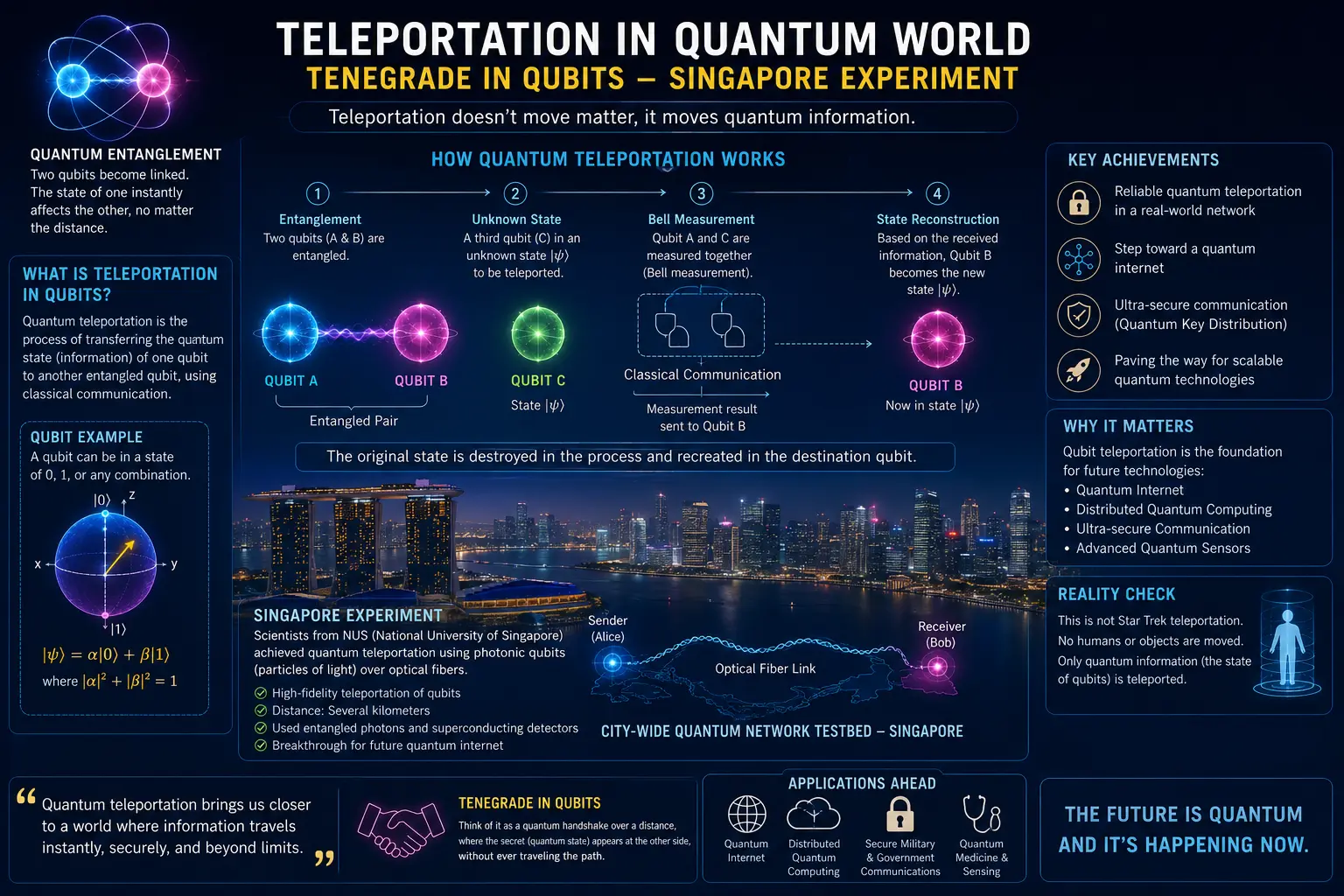
Teleportation is theoretically the transfer of matter from one point to another without passing through the space between the two points. Teleportation is a common theme in science fiction, but in actual science we have only been able to achieve quantum teleportation, which is the transfer of the quantum state of particles, not the particles themselves. Teleportation
Quantum teleportation, originally demonstrated in the 1990s, has been primarily used to teleport individual quantum states between two parties.
Such technology may be a major component of the future of quantum computing and ultra-secure communication. But teleporting people is far beyond current scientific capability due to enormous technical and physical challenges. Teleportation remains a vibrant research area that continues to excite scientists and science fiction fans worldwide.
Does teleportation occur around us?
Teleportation is not something that happens in nature with everyday objects, animals, or humans. But in quantum physics there is a phenomenon called quantum teleportation, which is possible under special conditions.
In 2007, a research team from Berkeley College published a paper claiming that photosynthetic plants are a type of living quantum computer that uses teleportation to carry out photosynthesis.
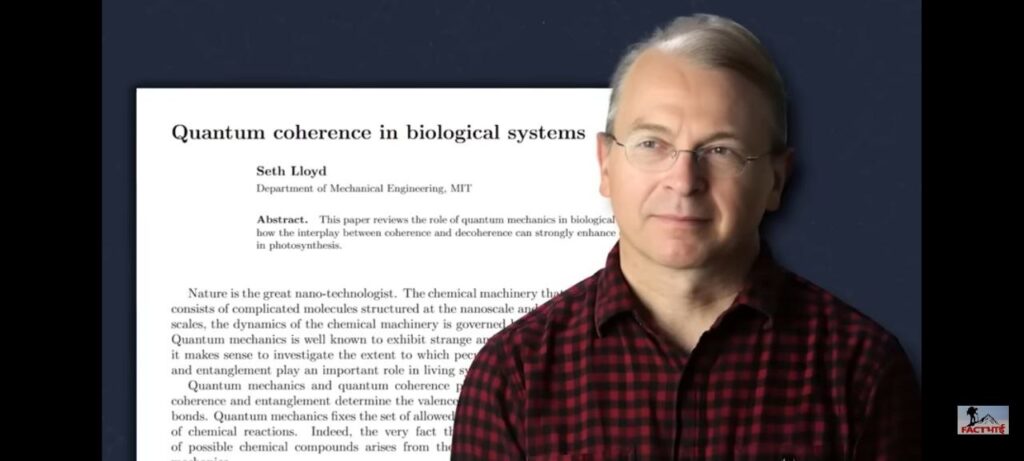
This research was quite interesting. When it reached MIT in the US, elite physicists there laughed upon merely reading the title and dismissed it as nonsense; however, one scientist among them—Prof. Seth Lloyd—grasped the seriousness of the matter.
In their paper, the scientists from Berkeley had asked just one question: how do plants achieve 100% efficiency in photosynthesis, whereas solar panels created by humans manage a maximum efficiency of only 42%?
Read about Quantum Biology- click here
Prof. Seth Lloyd Experiment- Teleportation
Professor Lloyd took the question raised in the Berkeley College paper seriously and decided to conduct experiments himself—growing plants right in front of him and studying them in the lab.
And guess what? In the research he published in 2011, he wrote that after a plant absorbs light and enters an excited state, the electron teleports itself simultaneously along all possible paths; this allows it to map out every route in advance to reach the active reaction center-chlorophyll A.
Similarly, in the movie The Avengers: Endgame, Dr. Strange teleports across 12 million possible realities simultaneously so he can identify the best path and inform Tony Stark.
Prof. Seth Lloyd’s research paper pdf
Chinese experiment
The experiment was carried out by a research team led by Xiduo Dong, Shiting Liu and Ya-Li Mao from the Southern University of Science and Technology in Shenzhen, China. They used photons as qubits, encoding their quantum information in the polarization degrees of freedom of the photons. The three network nodes were quantum entangled using entangled photon pairs generated by spontaneous parametric down-conversion (SPDC) processes. The entanglement was the resource needed for the teleportation of the Toffoli gate.
Can humans teleport?
Humans cannot teleport due to the huge data present inside their cells. Every cell of the human body can store 1.5 GB of data, and the adult human body has 40 trillion cells. It means the total data present in humans is 1.5 GB multiplied by 40 trillion, which is equal to 60 Zettabytes or 60,000 billion GBs.
You can imagine for yourself just how difficult it is to quantum-entangle such a vast amount of complex information. Just one tiny glitch, and you might emerge on the other side of the teleportation line as some sort of bizarre creature. It’s very risky and may be dangerous.
Watch the video for a better understanding about teleportation—click here
MIT Experiment on Teleportation
Research of Singapore scientists
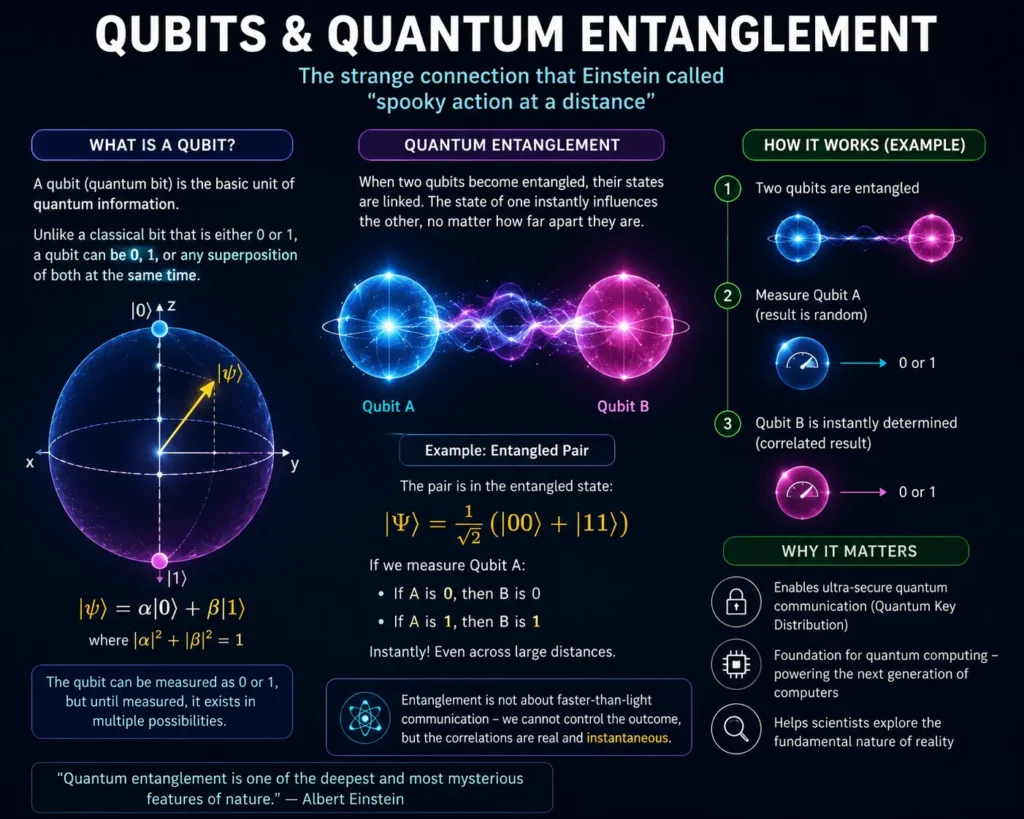
A research team in Singapore decided to start their experiment with a tiny organism—specifically, a tardigrade. They used two micro-circuits printed onto a silicon chip, much like those found on a motherboard. They then cooled the system to the universe’s lowest possible temperature—absolute zero (-273.15°C)—causing the circuits to become quantum-entangled and transform into qubits.
When a metal circuit is cooled to absolute zero, the metal turns into a superconductor, allowing electricity to flow spontaneously; however, if magnetic fields are applied in both directions, the current becomes “confused” about whether to flow clockwise or counter-clockwise—this state is what constitutes a qubit.
Now, if we take two qubits and subject them to clockwise and counterclockwise magnetic fields, they will become quantumly entangled. Subsequently, when a tinigrade is put to one qubit, its effect becomes visible in the other qubit.
But it is a compromise experiment. We need more successful experiments on this topic. This is the topic in physics; if it becomes successful, the whole world will change.

2 thoughts on “Can Teleportation Become Reality by 2050? Scientific research will surprise you”
Pingback: Cancer Cell vs Normal Cell: What You Need to Know for Better Health - Science Toppers
Pingback: The Future of the World—NanoTechnology - Science Toppers