What is blood?
Blood is the fluid connective tissue that helps in transporting essential and non-essential substances throughout the body. Blood is also protecting our body from infection and foreign material. There are three types of blood cells.
- Red blood cells (Erythrocytes)
- White blood cells (leukocytes)
- platelets (thrombocytes)
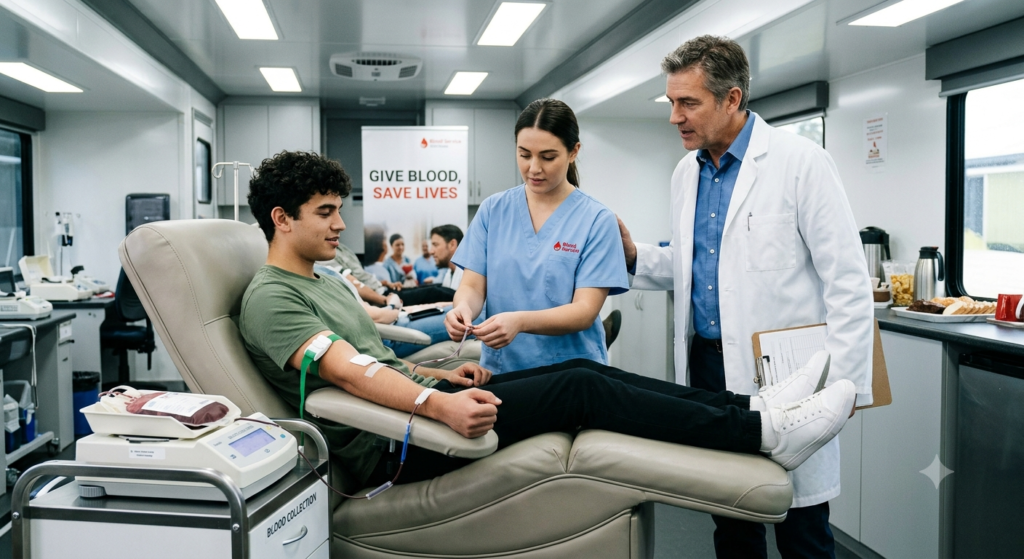
What is blood donation?
Blood donation is the voluntary process of giving blood so it can be used to help people who need blood transfusions. Donated blood is used to treat patients who have lost blood due to accidents, surgery, childbirth, cancer treatment, or certain medical conditions.
How blood donation works
- You register and answer questions about your health.
- A healthcare professional checks your blood pressure, pulse, temperature, and hemoglobin level.
- A sterile needle is used to collect blood, usually about 450–500 mL (about 1 pint).
- The donation usually takes 8–10 minutes, while the entire visit takes about 30–60 minutes.
- After donating, you are given refreshments and advised to rest for a short time.
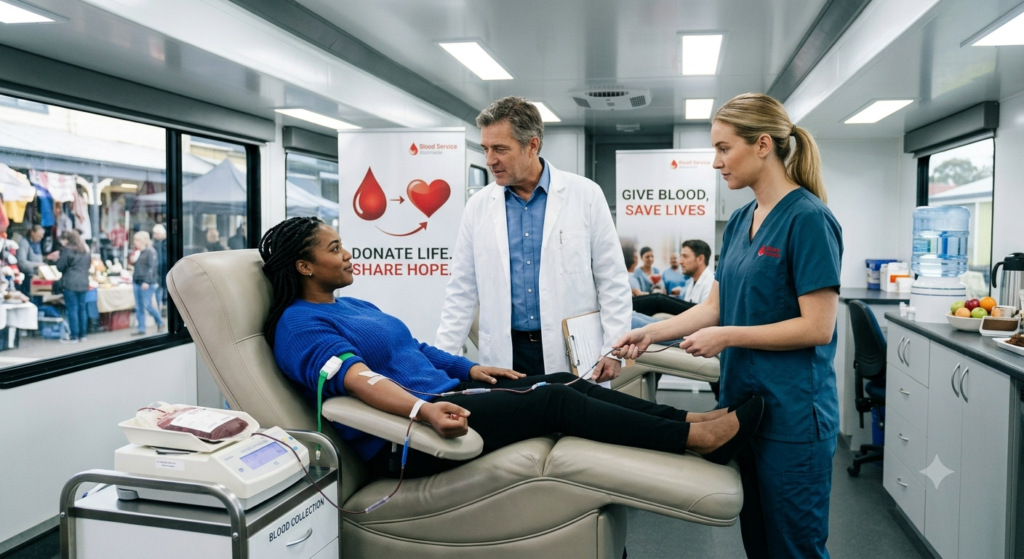
Benefits of blood donation
- Helps save lives.
- Supports hospitals during emergencies.
- Stimulates the body to produce new blood cells.
- Provides a basic health screening before donation.
Who can donate?
In general, a person should:
- Be in good health.
- Minimum age and weight requirements.
- Have adequate hemoglobin levels.
- Not have certain infections or medical conditions that could make donation unsafe.
What should we eat after blood donation?
After donating blood, it’s important to replace lost fluids and support your body’s recovery with nutritious foods.
Here are good choices to eat and drink:
- Drink plenty of fluids: Water, coconut water, milk, fruit juice, or oral rehydration drinks. Aim for extra fluids over the next 24 hours.
- Iron-rich foods: Spinach, beans, lentils, chickpeas, tofu, lean meat, fish, eggs, and iron-fortified cereals.
- Vitamin C-rich foods: Oranges, lemons, guava, kiwi, strawberries, tomatoes, and bell peppers. Vitamin C helps your body absorb iron.
- Protein-rich foods: Eggs, yogurt, paneer, chicken, fish, lentils, and nuts to support recovery.
- Healthy snacks: Bananas, apples, dried fruits, nuts, whole-grain sandwiches, or peanut butter on toast.
Conclusion
Blood donation is good for the donor and the rest of the world. We should never hesitate to donate blood. Your one decision can save someone’s life. Blood donation helps your body make fresh blood. Blood donation decreases the level of bad cholesterol, which can prevent blockage and heart attacks. Blood donation also decreases the chance of cancer. Over 800 crore people—we should always be ready to save someone’s life. Blood cannot be manufactured in any factories; it is only manufactured in the human body. So, get ready to donate blood.
Great post
Very informative content thanks for sharing with us. Your work will be change into a great sucess by the time so you need to keep patience ❤️.
I would like to sincerely appreciate your blog post on what we should eat after blood donation for fast recovery. It is one of the most informative and well-explained blog posts I have read.
You covered every important aspect in a clear and detailed manner, including what blood donation is, how the blood donation process works, its benefits, who is eligible to donate, the foods that help with quick recovery after donating blood, and the overall importance of blood donation. Every section is easy to understand and supported with useful information.
Your blog not only increases awareness about blood donation but also motivates readers to become responsible donors and help save lives. Thank you for sharing such valuable knowledge with us through your blog.
I truly appreciate your hard work and dedication to educating others.
Great post
👍👍